01 Sept 2023
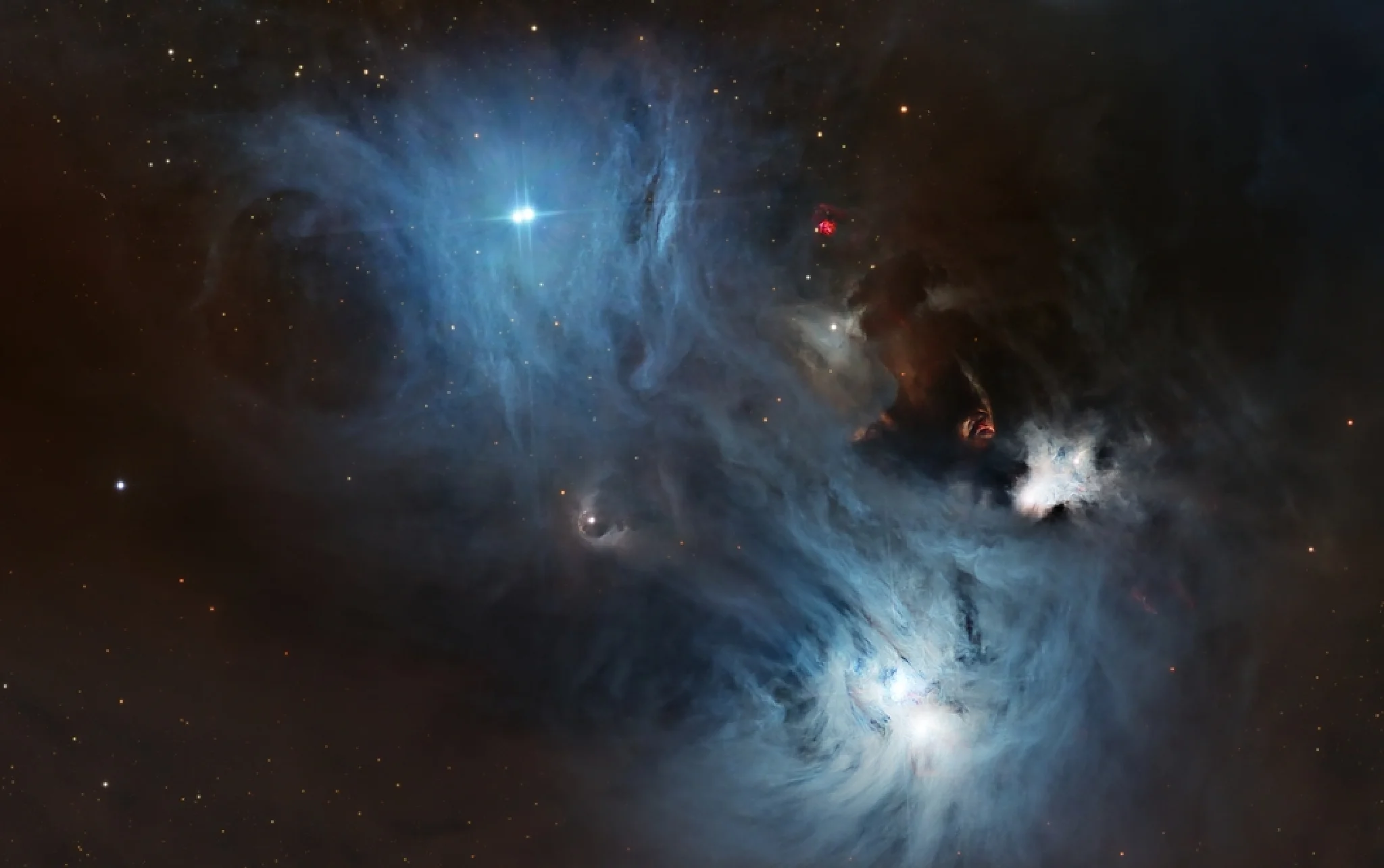
NGC 6729
A recent Telescope Live dataset from the Planewave CDK24 OTA in El Sauce, Chile, with the new QHY600M CMOS camera.
NGC 6729 and is an example of a variable nebula due to the variable stars that illuminate it. The nebula lies amidst a darker molecular cloud, with the illumination entirely reflective from the bright variable stars.
For simplicity, I indicated a single night of acquisition. The actual acquisition took place from mid July until near the end of August.
The image/dataset is a typical example of the excellent image quality captured by the CDK24/QHY600M imaging train.
NGC 6729 (also known as Caldwell 68) is a reflection/emission nebula of the Corona Australis Molecular Cloud in the constellation Corona Australis. It was discovered by Johann Friedrich Julius Schmidt in 1861.This fan-shaped nebula opens from the star R Coronae Australis toward the star T CrA to the south-east. R CrA is a pre-main-sequence star in the Corona Australis molecular complex, one of the closer star-forming regions of the galaxy at a distance of 130 pc. NGC 6729 is a variable nebula which shows irregular variations in brightness and in shape.
According to a brief summary of the object from the British Astronomical Association:
Corona Australis (NGC 6729) was the third variable nebula to be found and has been observed for over a century.
The variability of the two YSOs illuminating it, R and T CrA were discovered from Athens by Julius Schmidt. The nebula was a regular target of Harold Knox-Shaw from Helwan observatory in Egypt before and during the First World War and only its southerly declination has prevented it being better known. It lies just south of Sagittarius so does not rise from northern Europe. Nevertheless, the availability of remote telescopes has made possible regular observation.
NGC 6729
10 credit
- Type of target............................................................................................................................Reflection Nebula
- Camera............................................................................................................................QHY 600M
- Target coordinates............................................................................................................................RA 285.312 Dec -36.9784
- Hemisphere............................................................................................................................Southern
- Telescope location............................................................................................................................Chile
- Transient event............................................................................................................................No
- Observed on............................................................................................................................07 Jul 2023 - 24 Aug 2023
Filter | Avg Exp (s) | Total Exposure | Subframes |
|---|---|---|---|
| Luminance | 328 | 3h55m | 43 |
| Red | 314 | 3h45m | 43 |
| Green | 286 | 3h25m | 43 |
| Blue | 271 | 3h10m | 42 |