06 Sept 2023
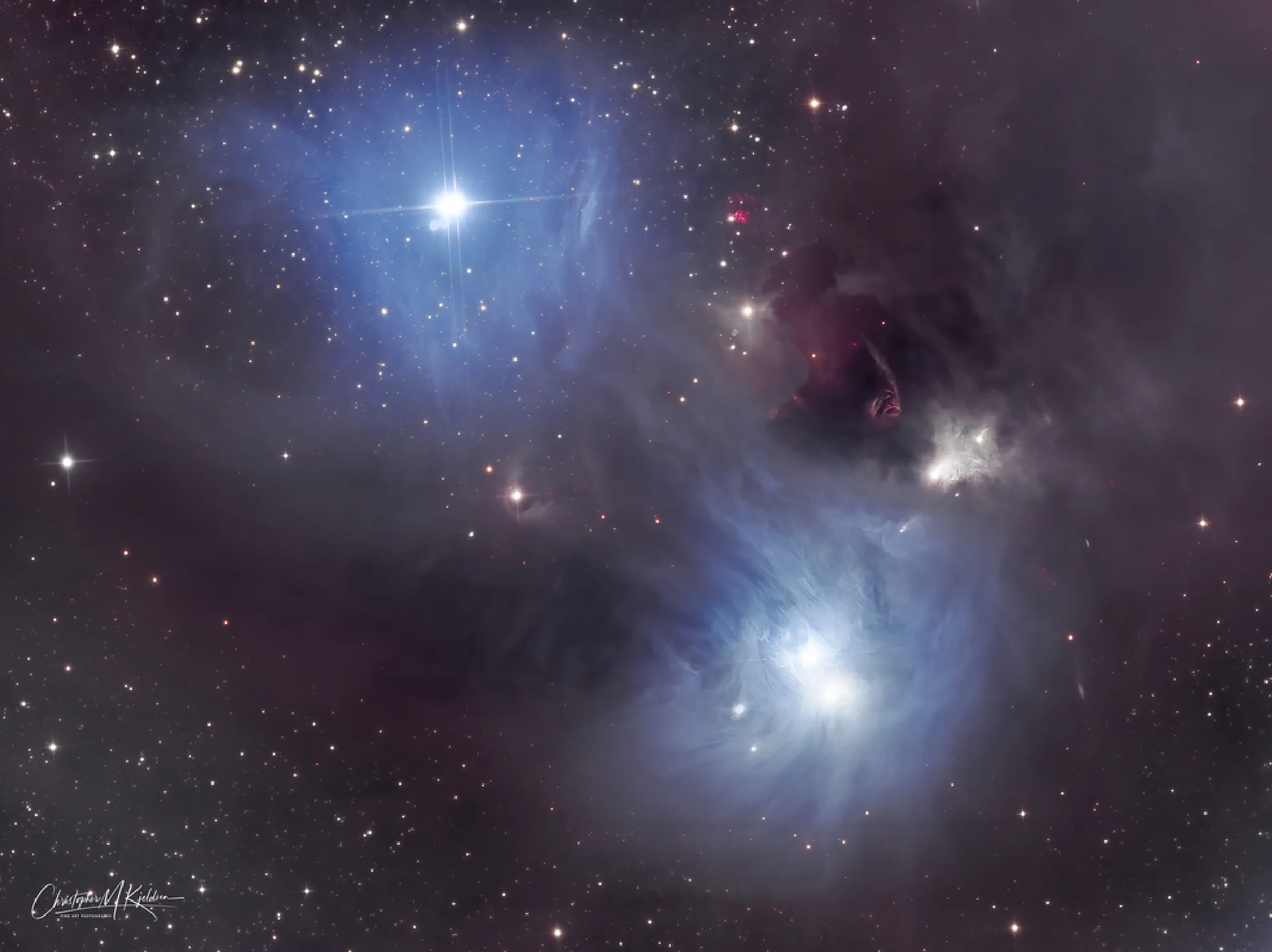
NGC6729 - Caldwell 68
This was a bit challenging to process, but after staring at it for days, I found where I wanted it to go. I hope you enjoy this reflection nebula! 😀👍💫
NGC 6729 (Caldwell 68)
Shot in the Rio Hurtado Valley, Chile
Telescope Live Network
Caldwell 68, also known as NGC 6729 (a reflection nebula), is located roughly 400 light-years away in the constellation Corona Australis, making it one of the closest star-forming regions to Earth. It is a small part of the larger Corona Australis Molecular Cloud. It was discovered by the German astronomer Johann Friedrich Julius Schmidt in 1861 and has an apparent magnitude of 9.5. The fan-shaped nebula appears to extend out from the star R Coronae Australis toward the star T Coronae Australis. The best time of year to spot Caldwell 68 is during the late summer in the Northern Hemisphere and late winter in the Southern Hemisphere. It can be seen using a small telescope.
Reflection nebulae are star-forming clouds of gas and dust that glow with the energy emitted from a hot, nearby star. The nebulae can glow across various wavelengths of light. The star that illuminates Caldwell 68 is known as a T Tauri star (A young star that has not yet reached temperatures high enough to ignite nuclear fusion and exhibits variations in its brightness.) - a type of young star whose brightness fluctuates over time. Often, T Tauri stars have circumstellar disks. These debris disks surround some young stars and could develop into solar systems much like our own.
(Source: NASA)
Shots: (13 hours)
• Blue – 34, 300 seconds
• Green – 35, 300 seconds
• Red – 45, 300 seconds
• Luminescence – 44, 300 seconds
NGC 6729
10 credit
- Type of target............................................................................................................................Reflection Nebula
- Camera............................................................................................................................QHY 600M
- Target coordinates............................................................................................................................RA 285.312 Dec -36.9784
- Hemisphere............................................................................................................................Southern
- Telescope location............................................................................................................................Chile
- Transient event............................................................................................................................No
- Observed on............................................................................................................................07 Jul 2023 - 24 Aug 2023
Filter | Avg Exp (s) | Total Exposure | Subframes |
|---|---|---|---|
| Luminance | 328 | 3h55m | 43 |
| Red | 314 | 3h45m | 43 |
| Green | 286 | 3h25m | 43 |
| Blue | 271 | 3h10m | 42 |