17 Dec 2025
Abell 65 (Sh 2-52)
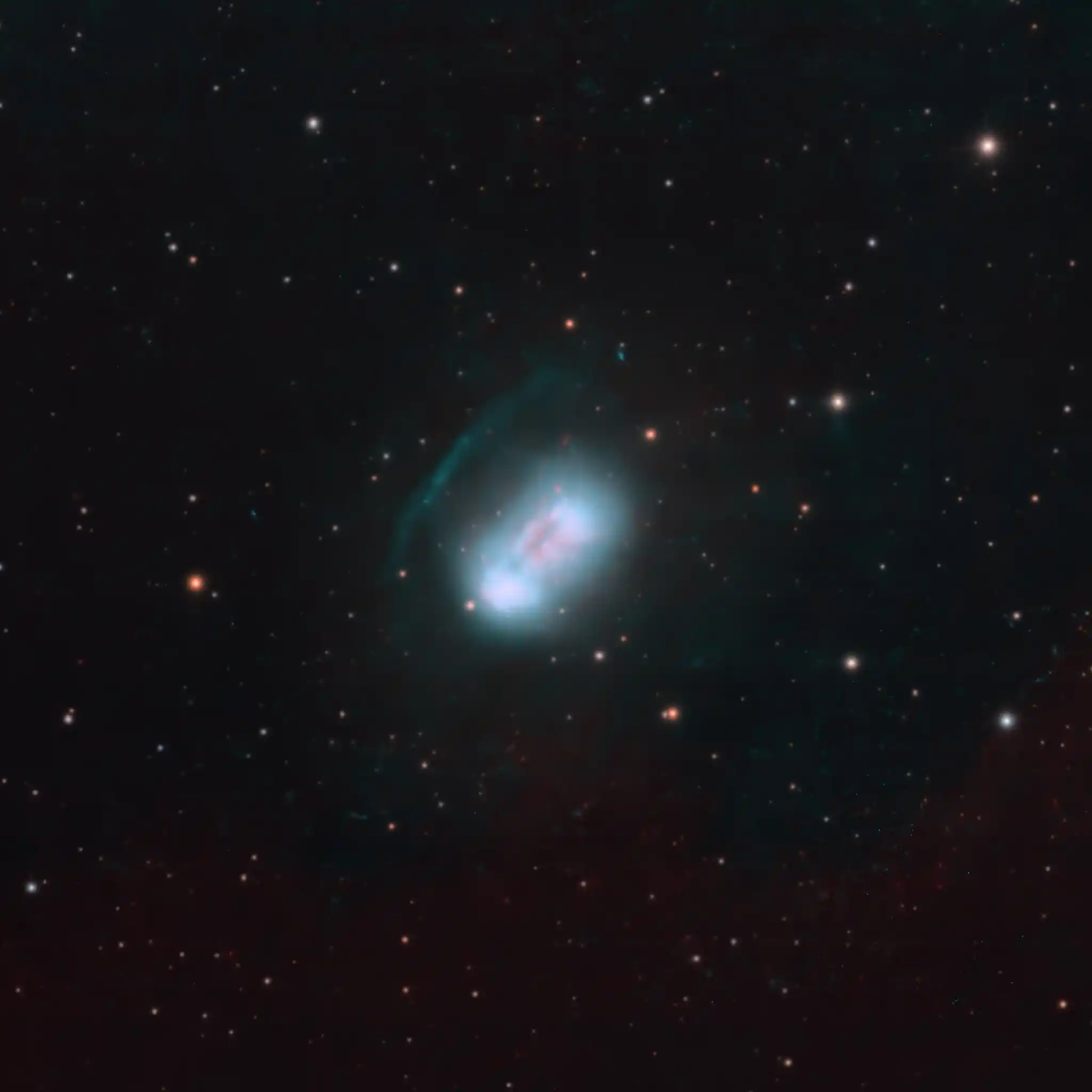
Abell 65 is a faint, double-shelled planetary nebula in the constellation Sagittarius, known for its unusual, elongated "peanut" or bipolar shape and a central eclipsing binary star system. The binary star is believed to be responsible for shaping the nebula's complex structure.
Key Characteristics
Location: Abell 65 is located in the constellation of Sagittarius, at an estimated distance of nearly 4,000 light-years from Earth.
Shape and Structure: It has a distinct double-shelled, bipolar structure, with the inner shell being brighter than the outer one. The alignment of the nebular shells with the binary's orbital inclination strongly suggests the binary system shaped the nebula.
Central Star: The nebula is notable for its central star, which is an eclipsing binary system with an orbital period of just over a day (approximately 1.0037577 days). This close binary interaction likely generated the nebula's non-spherical shape via a common envelope event.
Appearance: The nebula appears with a cyan or blue glow due to a strong presence of oxygen gas (O-III emission). It is a low surface brightness object and can be challenging for amateur astronomers to observe without filters, though it is considered one of the brighter objects in the Abell catalog of planetary nebulae.
Abell 65 was cataloged by George Ogden Abell in 1964, who identified it as a planetary nebula. It is also known by the designation Sh 2-52 in the Sharpless catalog.
Astrobin Image: https://www.astrobin.com/9euukj/
A66 65
1 credit