12 May 2024
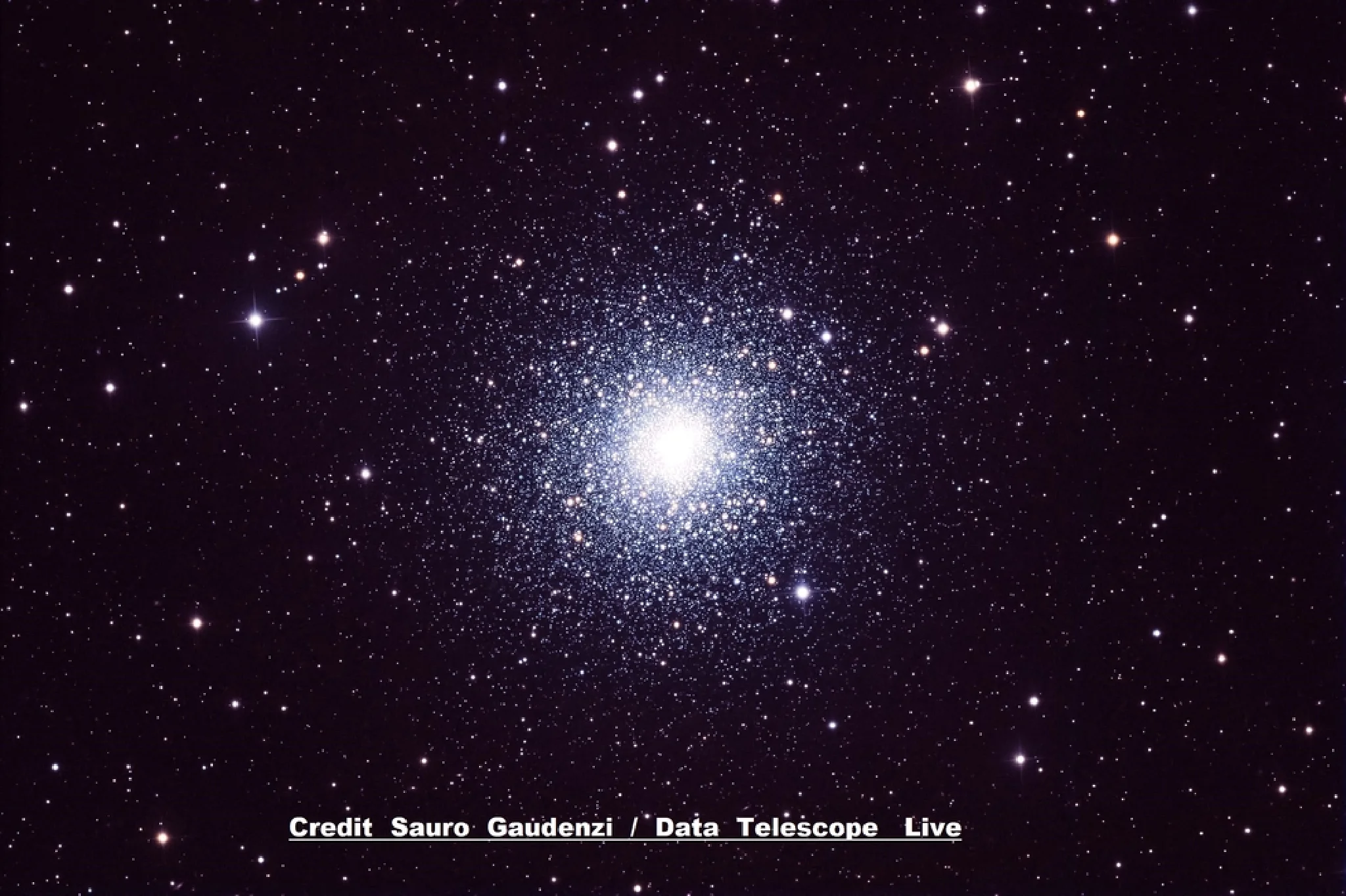
M2 Globular Cluster
M2, 60 minutes of integration in LRGB with Planewave CDK24 610/3962 f 6/5 telescope, QHY 600M Pro camera, are 12 shots of which in l 3x300 seconds, in R 3x300 seconds, in G 3 x300 seconds and in B 3x300 seconds, processing with Pixinsight and Photoshop. All data and shots were captured with Telescope Live. M2 (also known as NGC 7089) is a globular cluster in the constellation Aquarius. M2 is quite easy to spot, being close to α and β Aquarii (Sadalmelik and Sadalsuud). It is located 5 degrees north of β Aquarii, at the same declination as α Aquarii.
Given its apparent magnitude, M2 is a difficult object to observe with the naked eye, visible only in a sky in optimal conditions, but it is a simple target even for minimal optical aids such as theater binoculars, which show a small star shrouded in hazy light, in a field devoid of other companions. With an 8-inch telescope (about 20 cm) a partial resolution of the stars in the cluster is obtained; Larger telescopes, 10 inches (about 25 cm) upwards, allow a full view. A peculiar dark track intersects the rim of M2 to the northeast; Telescopes 16 inches (about 40 cm) and up show many other voids and darker, less prominent regions.
M2 can be observed from all populated areas of the Earth, thanks to the fact that it is located extremely close to the celestial equator; Therefore, there is no privileged hemisphere for its observation and from the pairs of similar latitudes of the two hemispheres the object is almost at the same height in the sky. While from the northern hemisphere it is an object of the summer skies, from the southern hemisphere it is characteristic of the winter months. The best time to observe it in the evening sky is between July and November.
M2
4 credit
- Tipo di obiettivo............................................................................................................................Globular Cluster
- Fotocamera............................................................................................................................QHY 600M
- Coordinate dell'obiettivo............................................................................................................................RA 323.3626 Dec -0.8233
- Emisfero............................................................................................................................Southern
- Posizione del telescopio............................................................................................................................Chile
- Evento transitorio............................................................................................................................No
- Osservato il............................................................................................................................16 May 2023 - 14 Jun 2023
Filtro | Exp. media (s) | Esposizione totale | Sottoframe |
|---|---|---|---|
| Blue | 339 | 2h10m | 23 |
| Green | 287 | 1h50m | 23 |
| Red | 300 | 1h55m | 23 |
| Luminance | 273 | 1h40m | 22 |